Structural repair is one of the most critical investments a property owner, facilities manager, or developer can make — especially as buildings age and the hidden stresses of time, climate, and use begin to surface. Whether you manage a decades-old residential block, a commercial facility, or a heritage structure, understanding the warning signs of deterioration and the solutions available is the essential first step towards protecting lives, assets, and long-term property value.
Why buildings deteriorate over time
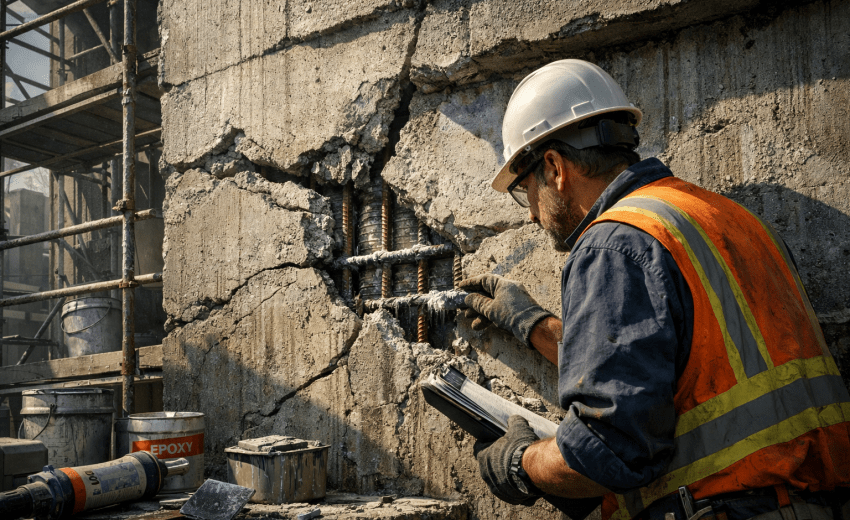
No building is immune to the effects of time. Concrete carbonates, steel reinforcement corrodes, foundations shift under changing soil conditions, and cladding systems lose their integrity. In regions with extreme heat, high humidity, or seismic activity, the rate of deterioration accelerates significantly. What begins as a hairline crack or a patch of surface spalling can — if left unaddressed — develop into a critical deficiency that threatens the entire building envelope.
Understanding the root cause of damage is the foundation of any effective structural repair strategy. Without accurate diagnosis, even the most advanced repair materials will fail to deliver lasting results.
Common structural issues in aging buildings
The most frequently encountered problems in older structures include concrete cracking and spalling, reinforcement corrosion, subsidence and foundation movement, delamination of render or cladding, and water ingress through compromised joints or membranes. Each of these defects demands a tailored structural repair approach — there is no single-solution fix for a building with compounding deterioration.
In seismically active zones or areas with expansive clay soils, structural repair must also account for dynamic loads and differential settlement, which standard surface treatments simply cannot address.
A building is only as strong as the quality of the repair decisions made when its weaknesses first appear.
Key structural repair methods
Modern structural repair encompasses a broad spectrum of techniques, each suited to specific conditions and severity levels. Crack injection using epoxy or polyurethane resins restores structural continuity and seals against water ingress. Carbon fibre reinforcement strips bonded to beams and columns dramatically increase load capacity without adding bulk. Concrete jacketing — casting a new reinforced layer around deteriorated elements — restores and often exceeds the original design strength.
For foundation issues, underpinning techniques such as micro-piling and resin injection stabilise structures that have moved or lost bearing capacity. In coastal or marine environments where chloride ingress drives reinforcement corrosion, cathodic protection systems halt the electrochemical degradation process entirely. Structural grouting fills voids beneath slabs or within masonry, restoring stiffness and load transfer where mass has been lost.
The importance of professional assessment
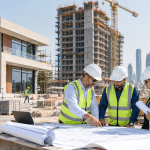
Effective structural repair always begins with a thorough condition survey carried out by a qualified structural engineer. Visual inspection alone is rarely sufficient — non-destructive testing methods such as ground-penetrating radar, half-cell potential mapping, and carbonation depth testing provide the data needed to prioritise interventions with precision.
Attempting structural repair without professional assessment risks misdiagnosis, inappropriate material selection, and — in the worst case — repairs that mask deeper problems rather than resolve them. In regulated markets, unauthorised structural work can also result in compliance failures and insurance complications.
Choosing the right structural repair contractor
When selecting a contractor for structural repair work, look for demonstrated experience with similar building types and defect profiles, familiarity with current repair standards and codes, access to specialist subcontractors for foundation or corrosion work, and clear documentation of proposed materials, methods, and warranties.
A reputable structural repair specialist will always provide a detailed scope of works, material data sheets, and a post-repair inspection programme. Transparency at every stage is a mark of a contractor who understands that repair is a long-term commitment, not a quick fix.
Preventive maintenance as a long-term strategy
The most cost-effective approach to structural repair is one that never becomes urgent. Scheduled inspections, prompt attention to minor defects, and protective coatings applied at regular intervals can extend a building’s serviceable life by decades. Property owners who invest in proactive maintenance programmes typically spend a fraction of what reactive repairs cost when deterioration has been allowed to advance unchecked.
In an era where sustainable construction and whole-life building performance are increasingly valued, structural repair and planned maintenance represent not just prudent management — but a commitment to the communities and users these buildings serve. In a world built on durability and precision, your building’s structural integrity should reflect nothing less.
Conclusion
Aging buildings are not a liability — they are an opportunity. With the right structural repair strategy, structures that appear compromised can be restored to full safety, performance, and often improved capacity. The key is acting early, relying on qualified professionals, and treating repair not as a reactive measure but as a core part of responsible building ownership.
Throughout this blog, we have explored how deterioration develops, the most common defects found in older structures, the range of modern repair techniques available, and the critical role that professional assessment and contractor selection play in achieving lasting results. Every building has a story — and with the right intervention, that story does not have to end prematurely.
Whether you are dealing with hairline cracks that have gone unaddressed for years or facing a more urgent foundation challenge, the solution begins with a single step — an expert assessment. The sooner deterioration is diagnosed, the simpler and more affordable the remedy.
In a built environment where safety, sustainability, and longevity matter more than ever, structural repair is not just an engineering task. It is a commitment to the people who live, work, and depend on the buildings we maintain.
Ready to Build with Confidence?
Get in touch with Charminar to learn how our project management expertise can streamline your next development.
📧 contact@bluediamondfm.com
📞 +971 56 705 4223
🌐 https://charminardubai.com/
Frequently Asked Questions (FAQ)
How do I know if my building needs structural repair?
Key warning signs include visible cracks wider than 0.3mm, doors or windows that no longer close properly, floor or ceiling deflection, water staining on structural elements, and visible rust staining on concrete surfaces. If any of these are present, a structural engineer should carry out a condition survey without delay.
How long does structural repair work typically take?
Duration varies considerably by scope and complexity. Localised crack injection may take a single day, while full foundation underpinning or concrete jacketing of multiple columns across a building could span several weeks or months. A detailed programme of works should be issued by the contractor before work begins.
Can buildings remain occupied during structural repair?
In many cases, yes — particularly for localised repairs, external cladding work, or phased programmes that allow parts of the building to remain in use. However, major foundation works or internal column repairs may require temporary decanting of occupants for safety. This will be confirmed during the pre-construction assessment.
What materials are most commonly used in modern structural repair?
Modern structural repair relies on polymer-modified cementitious mortars, epoxy and polyurethane resins, carbon fibre reinforcement systems, corrosion-inhibiting primer coatings, and high-performance protective topcoats. Material selection is always governed by the specific defect type, exposure environment, and structural requirements of the project.
Is structural repair more cost-effective than demolition and rebuild?
In the majority of cases, yes. Structural repair preserves the existing structure, reduces construction waste, avoids demolition and disposal costs, and can typically be completed in a fraction of the time required for a new build. For heritage or architecturally significant buildings, repair is often the only viable option. A structural engineer can provide a cost-benefit analysis for your specific situation.