Maintenance is the single most powerful investment a property owner can make. Whether you manage a commercial tower, a residential complex, or an industrial facility, the way you care for a building today determines how well it performs tomorrow. Neglect even the smallest issue — a hairline crack, a rusted joint, a slow-draining gutter — and that minor flaw can snowball into a structural crisis that costs ten times more to fix. This blog explores why a proactive approach to building care pays dividends for decades and how your team can build a system that keeps every square metre of your property in peak condition.
Why Buildings Deteriorate Faster Without a Plan
Every building faces the same enemies: moisture, temperature fluctuation, UV radiation, heavy use, and time. Without scheduled inspections and timely repairs, these forces chip away at structural integrity silently. Concrete spalls, steel corrodes, roofing membranes crack, and HVAC systems lose efficiency year after year.
The global construction and facilities industry has long recognised that reactive repairs — fixing things only after they break — cost significantly more than planned, preventive action. Studies consistently show that for every dollar spent on planned building upkeep, organisations save between four and ten dollars in emergency repair costs. The logic is simple: catching a problem early keeps it small.
The Four Pillars of a Strong Maintenance Strategy
- Preventive Maintenance Preventive routines form the backbone of any building management programme. Scheduled inspections of roofing, plumbing, electrical systems, facades, and mechanical equipment allow engineers to identify wear before it becomes damage. Tasks like cleaning filters, lubricating hinges, sealing gaps, and testing fire suppression systems are low-cost actions that prevent high-cost failures.
- Predictive Maintenance Modern buildings benefit from sensor technology, infrared thermography, and vibration analysis that can forecast equipment failure before it occurs. Predictive maintenance uses real-time data to trigger repairs only when a component shows genuine signs of stress — eliminating unnecessary work while preventing sudden breakdowns. It is especially effective for elevators, boilers, generators, and large HVAC systems.
- Corrective Maintenance Even the best preventive plan cannot eliminate every failure. Corrective maintenance addresses problems as they arise, restoring systems to their intended function. The key is speed: rapid response limits secondary damage and keeps occupants safe. A well-designed facilities team has clear escalation protocols, approved vendors on standby, and documented repair histories that help technicians diagnose issues faster.
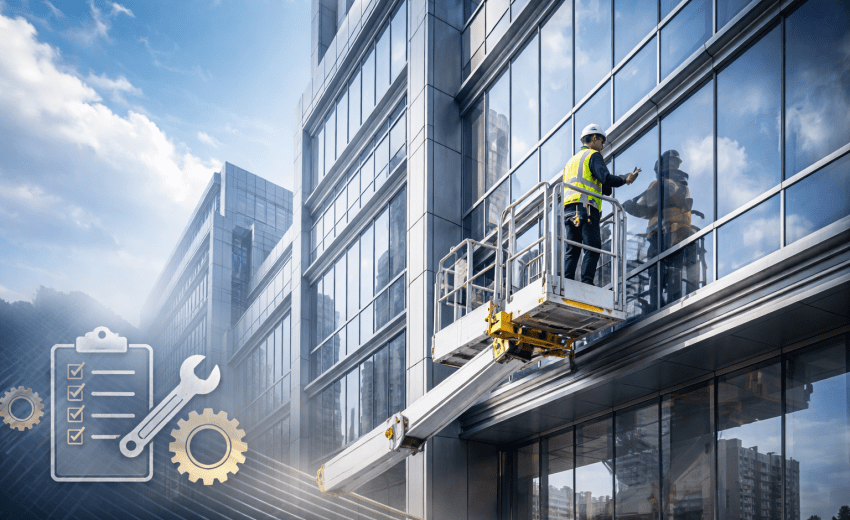
- Condition-Based Maintenance Condition-based strategies sit between preventive and predictive approaches. Technicians assess components at defined intervals — not on a fixed calendar, but according to the actual state of each element. Facade inspections after a major storm, structural audits following a seismic event, or electrical assessments after a power surge all fall under this category.
How Proper Upkeep Directly Extends Building Life
A well-maintained structure can outlast its design life by 20 to 40 years. Here is how disciplined building care achieves that outcome:
Structural Integrity: Regular inspections and crack repairs prevent water ingress, which is the leading cause of reinforced concrete deterioration. Keeping the building envelope sealed and weatherproof protects every layer beneath it.
Mechanical System Longevity: HVAC units, pumps, and generators that receive scheduled servicing run more efficiently and last significantly longer than neglected equipment. A chiller that should last 15 years can operate well beyond 25 years with proper care.
Energy Efficiency: Poorly maintained insulation, leaking ductwork, and dirty filters force mechanical systems to work harder, driving up energy bills and accelerating wear. Routine upkeep keeps energy performance close to design specifications.
Safety Compliance: Regular fire safety checks, lift certifications, and electrical audits ensure the building meets current codes. Non-compliance not only risks lives but exposes owners to legal liability and costly retrofit work.
Asset Value Preservation: A building that is demonstrably well cared for commands higher rental rates, lower vacancy, and stronger resale value. Buyers and tenants scrutinise maintenance records — a clean history is a compelling selling point.
Building a Culture of Ongoing Care
Technology alone does not extend building life — people do. The most effective facilities teams embed a culture of ownership, where every engineer, technician, and manager understands the long-term impact of their daily actions. Digital Computerised Maintenance Management Systems (CMMS) help teams schedule tasks, track work orders, log asset histories, and generate reports that inform capital planning decisions.
Leadership commitment is equally critical. When building owners allocate appropriate budgets for upkeep and treat it as a strategic priority rather than an optional expense, the results are visible in the performance of the building and the satisfaction of its occupants.
Conclusion
A building is a living asset. Like any asset, it rewards consistent attention and punishes neglect. By embedding structured maintenance practices into daily operations, property owners protect their investment, reduce lifecycle costs, and create environments that remain safe, efficient, and functional for generations. Start with a comprehensive audit of your current building condition, establish a clear schedule of inspections and servicing, and commit to the principle that prevention always outperforms cure.
Ready to Build with Confidence?
Get in touch with Charminar to learn how our project management expertise can streamline your next development.
📧 contact@bluediamondfm.com
📞 +971 56 705 4223
🌐 https://charminardubai.com/
Frequently Asked Questions (FAQ)
How often should a building undergo a full maintenance inspection?
Most experts recommend a comprehensive building inspection at least once a year, with more frequent checks — quarterly or monthly — for critical systems such as fire suppression, HVAC, and electrical panels. High-traffic commercial buildings may require more frequent reviews.
What is the difference between preventive and predictive maintenance?
Preventive maintenance follows a fixed schedule regardless of equipment condition — for example, changing air filters every three months. Predictive maintenance uses real-time monitoring data to trigger action only when equipment shows early signs of failure, making it more targeted and often more cost-effective.
How much should a building owner budget for annual upkeep?
Industry benchmarks suggest allocating between 1% and 4% of a building’s replacement value each year for planned upkeep and capital repairs. The exact figure depends on building age, type, occupancy, and local climate conditions.
Can a neglected building be restored to a long service life?
Yes, but the cost and effort increase significantly the longer issues are left unaddressed. A thorough condition assessment followed by a phased remediation programme — tackling structural, mechanical, and envelope issues in order of priority — can bring a neglected building back to a sound operational state.
What role does technology play in modern building management?
Technology plays a transformative role. IoT sensors, building automation systems, drone inspections, and CMMS platforms enable teams to monitor assets in real time, schedule work intelligently, and use data to make better decisions about capital investment and long-term building strategy.