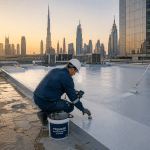
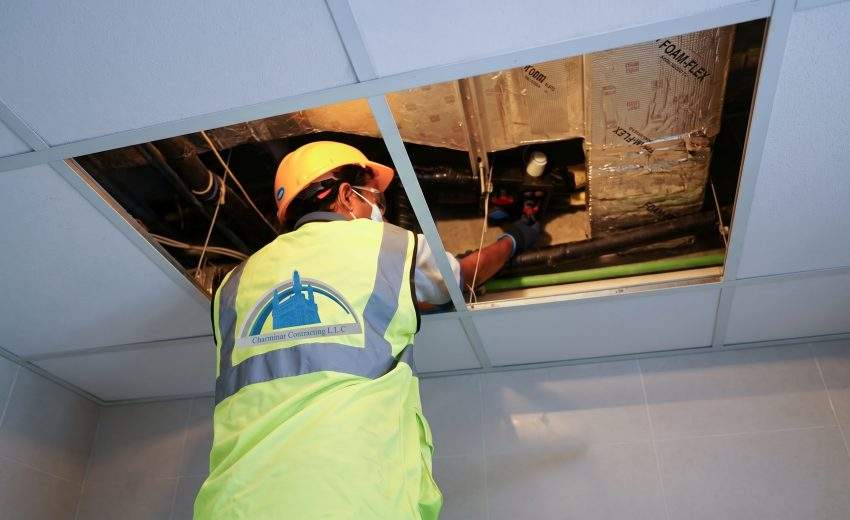
Dubai’s climate is brutal on buildings in ways that owners from temperate countries rarely anticipate. Summer surface temperatures on exposed facades and rooftops regularly exceed 60°C. Sandstorms abrade paint and seals. Humidity swings drive condensation into MEP systems. Salt air along the coast accelerates corrosion. A maintenance schedule that would be adequate in Europe or North America simply isn’t enough here — and the gap between “adequate elsewhere” and “adequate in Dubai” is where most expensive building failures originate.
This guide sets out ten essential building maintenance Dubai practices every property owner — residential, commercial or mixed-use — should have in place, along with what happens when each one is skipped.
1. Schedule Preventive HVAC Maintenance, Not Reactive Repairs
Air conditioning isn’t a comfort feature in Dubai — for roughly seven months of the year it’s essential infrastructure, and it runs harder here than almost anywhere else in the world. Chillers, AHUs, FCUs and ductwork accumulate dust and biological growth quickly in this climate, and neglected filters and coils don’t just reduce comfort — they spike energy consumption and shorten equipment lifespan dramatically.
What good building maintenance Dubai practice looks like: quarterly filter changes, biannual coil cleaning, annual chiller servicing, and continuous monitoring of refrigerant levels and compressor performance. Waiting for a full system failure in August is the single costliest maintenance mistake a property owner can make.
2. Inspect and Maintain the Building Facade
UV exposure, sand abrasion, thermal expansion cycles and, near the coast, salt air all degrade exterior cladding, sealant joints, glazing and paint far faster than in milder climates. Failed sealant joints let water penetrate behind cladding, where it causes hidden structural and insulation damage long before any visible sign appears on the surface.
A practical Building Maintenance Dubai looks like: annual facade inspection (ideally including rope access or drone survey for high-rise buildings), resealing of expansion joints on a 5–7 year cycle, and prompt repair of any cracked render or spalling concrete — a small crack today is a major structural repair in three years if water keeps finding its way in.
3. Maintain Fire and Life Safety Systems
Fire alarm panels, sprinkler systems, fire extinguishers, emergency lighting and smoke extraction systems are subject to mandatory Dubai Civil Defence inspection and certification requirements. Beyond compliance, these are the systems that matter most in the rare event they’re actually needed — deferred maintenance here isn’t a minor oversight.
Building Maintenance Dubai means monthly visual checks, quarterly system testing, and annual full certification by a Civil Defence-approved contractor, with dated records kept on file at all times for audit and insurance purposes.
4. Keep Drainage and Grease Systems Clear
Blocked storm drains, roof drains and grease traps are behind a disproportionate share of Dubai property damage claims — flash flooding during the rare but intense winter rain events overwhelms systems that haven’t been cleared of accumulated sand and debris. For any property with F&B tenants, grease trap maintenance is additionally a food-safety compliance requirement, not just a plumbing one.
So Building Maintenance Dubai plans for pre-rainy-season drain clearing (ideally October), quarterly roof drain inspection, and a documented grease trap cleaning schedule for any commercial kitchen on the premises.
5. Service Elevators and Escalators on a Fixed Schedule
Vertical transportation is one of the most heavily used — and most safety-critical — systems in any multi-storey Dubai building. RTA and Dubai Municipality both hold requirements around elevator maintenance and periodic inspection for buildings with public-access lifts.
When we say Building Maintenance Dubai, that means we do monthly preventive maintenance visits from a licensed elevator contractor, immediate response protocols for breakdowns, and maintained service logs available for authority inspection.
6. Manage Pest Control Proactively, Not Reactively
The UAE’s warm climate supports near-continuous pest breeding cycles, and buildings with shared drainage, waste storage and multiple tenants are particularly vulnerable to rodents, cockroaches and other pests moving between units. A single infestation in a mixed-use building rarely stays contained to one tenant.
As a part of Building Maintenance Dubai a documented Integrated Pest Management program with scheduled inspections, sealed waste management, and — for any F&B tenants — audit-ready pest control records satisfying both Municipality and, where applicable, Trakhees requirements.
7. Protect the Water System — Tanks, Pumps and Plumbing
Water storage tanks in Dubai’s heat are vulnerable to bacterial growth and sediment buildup if not cleaned on schedule, and booster pumps working against high-rise pressure demands need regular servicing to avoid supply failures. Dubai Municipality mandates periodic water tank cleaning for a reason.
What good practice looks like: water tank cleaning and disinfection at minimum every six months (more frequently for larger or older tanks), pump servicing on a preventive schedule, and prompt investigation of any pressure drop or water quality complaint from tenants.
8. Maintain Electrical Systems and DEWA Compliance
Dubai’s heat and humidity put real stress on electrical infrastructure — panel connections loosen, insulation degrades faster, and overloaded circuits pose genuine fire risk. DEWA has its own compliance expectations around electrical safety, particularly for common-area systems in multi-tenant buildings.
So Building Maintenance Dubai means annual thermal imaging surveys of distribution boards to catch overheating connections before they fail, scheduled testing of emergency generators and UPS systems, and prompt remediation of any DEWA-flagged issues.
9. Manage Common Area and Landscaping Upkeep
For residential and mixed-use buildings, common area condition directly affects tenant satisfaction, occupancy rates and resale/rental value. Landscaping in particular demands attention in Dubai’s climate — irrigation systems need constant calibration against evaporation rates, and poorly maintained green areas become pest harbourage rather than an amenity.
In the process of Building Maintenance Dubai a defined cleaning schedule for lobbies, corridors and amenity spaces, irrigation system audits each season, and prompt repair of common-area fixtures before minor issues affect tenant experience.
10. Keep Comprehensive, Dated Maintenance Records
This is the tip owners most often overlook, and it’s arguably the most valuable one. Insurance claims, warranty disputes, tenant complaints, Civil Defence audits and eventual property resale all depend on being able to produce evidence of what was maintained, when, and by whom.
In Building Maintenance Dubai we should mentaine a centralized digital record — whether a facilities management platform or even a well-organized shared drive — logging every service visit, certificate, and inspection report across every system above, accessible on demand rather than scattered across individual contractor invoices.
Building an Annual Maintenance Calendar
Rather than treating these ten areas as separate concerns, most successful building maintenance Dubai programs run on annual calendar structured around the climate:
| Season | Priority Focus |
|---|---|
| Pre-summer (March–April) | HVAC servicing, chiller overhaul, thermal imaging of electrical panels |
| Peak summer (May–September) | Reactive HVAC monitoring, facade heat-stress checks, water tank cooling checks |
| Pre-rainy season (October) | Drain clearing, roof waterproofing checks, facade sealant inspection |
| Winter (November–February) | Facade and structural inspection, landscaping overhaul, annual fire safety certification, elevator audits |
AMC vs. Ad-Hoc: Which Makes Sense for Your Property
An Annual Maintenance Contract (AMC) bundles preventive visits across multiple systems under one provider and one predictable cost. Ad-hoc maintenance means calling a contractor only when something breaks.
For any property beyond a small standalone villa, an AMC consistently works out cheaper over a 3–5 year horizon — reactive emergency call-outs cost significantly more per visit than scheduled preventive work, and the compliance documentation an AMC generates automatically is difficult to assemble retroactively when an inspector or insurer asks for it.
Protect Your Property's Value, Compliance and Tenant Experience
Effective building maintenance Dubai practice isn’t a single task — it’s ten interconnected systems that, together, protect your asset value, keep you compliant with UAE authorities, and prevent the kind of deferred-maintenance failures that cost far more to fix than to prevent.
Book a free property assessment. Charminar Contracting team will review your building’s specific maintenance needs across MEP, fire safety, drainage and more, and provide a transparent AMC proposal built around your property — anywhere across Dubai.
📞 Call / WhatsApp: 056 705 4223 | 📧 Email: care@charminardubai.com| 🌐 Request a quote: https://charminardubai.com/contact-us/
Ready to Build with Confidence?
Get in touch with Charminar to learn how our project management expertise can streamline your next development.
📧 contact@bluediamondfm.com
📞 +971 56 705 4223
🌐 https://charminardubai.com/
Frequently Asked Questions (FAQ)
How much does building maintenance cost in Dubai?
Costs vary enormously by property size, system complexity and service scope, but AMC packages are typically priced per square foot or as a fixed monthly/annual fee covering defined systems. A detailed site survey and itemised quotation is the only reliable way to budget accurately.
How often should HVAC systems be serviced in Dubai?
Filters should be checked monthly and changed quarterly at minimum, with coil cleaning biannually and full chiller servicing annually. High-usage commercial buildings often warrant more frequent intervals.
Is building maintenance legally required in Dubai?
Certain elements are mandatory — fire and life safety system certification, elevator inspection, and water tank cleaning are all subject to authority requirements (Dubai Civil Defence, RTA, Dubai Municipality respectively). Other maintenance, while not always legally mandated, is essential for asset protection and insurance validity.
What's the difference between reactive and preventive maintenance?
Reactive maintenance responds to failures after they happen. Preventive maintenance follows a fixed schedule designed to catch and address issues before failure occurs. Preventive approaches consistently cost less over time and reduce the risk of tenant disruption or safety incidents.
How do I choose a reliable building maintenance company in Dubai?
Verify trade licensing, ask for references from similar-sized properties, confirm they carry public liability insurance, request sample service reports to assess documentation quality, and check whether they offer the specific authority certifications (Civil Defence, RTA, Municipality) your property requires.