
Waterproofing is one of the most critical investments a building owner can make. Whether you manage a residential property, a commercial structure, or an industrial facility, moisture intrusion can silently compromise the structural integrity of your building — leading to expensive repairs, health hazards, and long-term asset devaluation. This guide explores why waterproofing matters, the most effective methods available, and how to build a comprehensive leak prevention strategy for any structure.
Why Waterproofing Matters
Water is a building’s most relentless enemy. Even minor leaks, left unaddressed, can trigger mould growth, corrode steel reinforcements, crack concrete, and rot timber frameworks. The consequences extend beyond structural damage — prolonged moisture exposure creates unhealthy indoor environments, increases energy costs through reduced insulation performance, and can trigger costly insurance claims.
Proactive waterproofing is not just a construction best practice — it is a financial safeguard. Studies consistently show that every dirham spent on waterproofing at the construction stage saves significantly more in remediation costs later. Proper waterproofing also ensures buildings comply with local construction codes and maintains their market value over time.
Common Areas Vulnerable to Water Ingress
Understanding where water enters a building is the first step in effective waterproofing. The most common vulnerable points include:
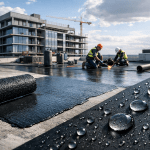
Rooftops and terraces: Flat or low-slope roofs are particularly prone to ponding water. Without proper drainage and waterproofing membranes, leaks quickly develop at joints, parapet walls, and around penetrations like pipes and HVAC units.
Basements and foundations: Subsurface water pressure (hydrostatic pressure) forces moisture through cracks and porous concrete. Basement waterproofing must address both internal and external faces of the structure.
Bathrooms and wet areas: Tile grout, pipe joints, and wall-floor junctions are frequent failure points in bathrooms, kitchens, and utility rooms.
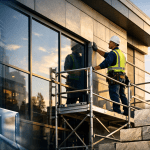
External walls and facades: Wind-driven rain can penetrate hairline cracks in render, brickwork, or cladding systems, saturating insulation and internal walls.
Types of Waterproofing Systems
There is no single solution that fits every scenario. Selecting the right system depends on the substrate, location, exposure level, and budget.
- Bituminous Membrane Waterproofing Bituminous (asphalt-based) membranes are widely used on roofs, foundations, and below-grade structures. They are applied as torch-on sheets or self-adhesive rolls, providing a robust, seamless barrier against water penetration. This method is cost-effective and highly durable when properly installed.
- Liquid Applied Membranes Polyurethane and acrylic liquid membranes are brushed or sprayed onto surfaces, forming a continuous elastic film that conforms to complex shapes and penetrations. Liquid membranes are ideal for terraces, balconies, and areas with irregular geometry where sheet membranes are difficult to apply.
- Cementitious Waterproofing Cementitious coatings — mixed with water and applied like paint or render — are commonly used in water tanks, swimming pools, and wet areas. While rigid and less crack-tolerant than membranes, they bond strongly to concrete and masonry substrates.
- Crystalline Waterproofing Crystalline technology works by penetrating concrete and forming insoluble crystals within the capillary pores, permanently blocking water pathways. This system is particularly effective for basement walls, tunnels, and water-retaining structures because it is self-sealing and remains active even if the surface is damaged.
Leak Prevention Best Practices
Effective waterproofing goes hand in hand with a robust leak prevention strategy. The following best practices should be incorporated at both the design and maintenance stages:
Design for drainage: Ensure adequate slopes on all horizontal surfaces. Standing water accelerates membrane degradation and increases hydrostatic pressure.
Seal all penetrations: Pipes, conduits, and fixings that pass through waterproofed layers must be sealed with appropriate collars and flexible sealants.
Use compatible materials: Ensure that primers, membranes, and overcoats are from the same system and are chemically compatible. Mixing incompatible products leads to adhesion failures.
Schedule regular inspections: Annual or bi-annual inspections of roofs, facades, and below-grade areas enable early detection of cracks, blistering, or joint failures before they become major leaks.
Waterproofing in Hot and Humid Climates
In regions like the UAE, waterproofing systems face additional challenges. Extreme heat causes thermal expansion and contraction, which stresses joints and membranes. High humidity and occasional intense rainfall demand products with superior UV resistance and flexibility. Polyurethane-based liquid membranes and high-build elastomeric coatings are particularly well-suited to these conditions, offering excellent elongation properties and UV stability.
Conclusion
Selecting a qualified waterproofing contractor is just as important as choosing the right materials. Look for professionals with demonstrable experience in your building type, access to approved product systems, and a track record of proper surface preparation and application. A well-executed waterproofing installation, backed by a meaningful product and workmanship warranty, gives building owners the confidence that their structure is genuinely protected for years to come.
Ready to Build with Confidence?
Get in touch with Charminar to learn how our project management expertise can streamline your next development.
📧 contact@bluediamondfm.com
📞 +971 56 705 4223
🌐 https://charminardubai.com/
Frequently Asked Questions (FAQ)
How often should waterproofing be reapplied?
The lifespan of a waterproofing system varies by product type. Bituminous membranes typically last 10–15 years, while high-quality polyurethane liquid membranes can perform effectively for 10–20 years with minimal maintenance. However, all systems should be inspected annually and recoated or repaired when signs of wear, cracking, or delamination appear. In harsh climates, more frequent inspection is recommended.
What is the difference between damp-proofing and waterproofing?
Damp-proofing is designed to resist moisture vapour transmission but is not intended to withstand liquid water under pressure. Waterproofing, by contrast, creates a fully impermeable barrier capable of resisting hydrostatic pressure and direct water ingress. For basements, underground structures, and areas subject to flooding or standing water, full waterproofing — not just damp-proofing — is essential.
Can waterproofing be applied to existing buildings?
Yes. Remedial waterproofing is a well-established field. Existing buildings can be treated with liquid-applied coatings, injection grouting for active leaks, and crystalline treatments for concrete structures. The key to successful remedial waterproofing is thorough surface preparation — removing existing failed coatings, repairing cracks, and ensuring a clean, dry substrate before applying any new system.
How do I know if my building needs waterproofing?
Common warning signs include water stains on ceilings or walls, peeling paint or plaster, visible cracks, damp or musty smells, efflorescence (white salt deposits) on masonry, and mould growth. If you notice any of these signs, a professional waterproofing survey should be conducted promptly. Early intervention is always more cost-effective than addressing advanced structural damage.
What is the most durable waterproofing system for rooftops?
For flat and low-slope rooftops, hot-applied modified bituminous membranes and reinforced polyurethane liquid systems are among the most durable options. In high-UV and high-temperature environments, reflective elastomeric coatings applied over a primary membrane system offer additional longevity by reducing thermal stress. The best system for any given roof depends on its substrate, traffic exposure, and drainage design.